Product
Know Anyone Hooked on Grindr?
Only 8.4% pay, yet a live local grid keeps the entire network moving.
The room changes without you
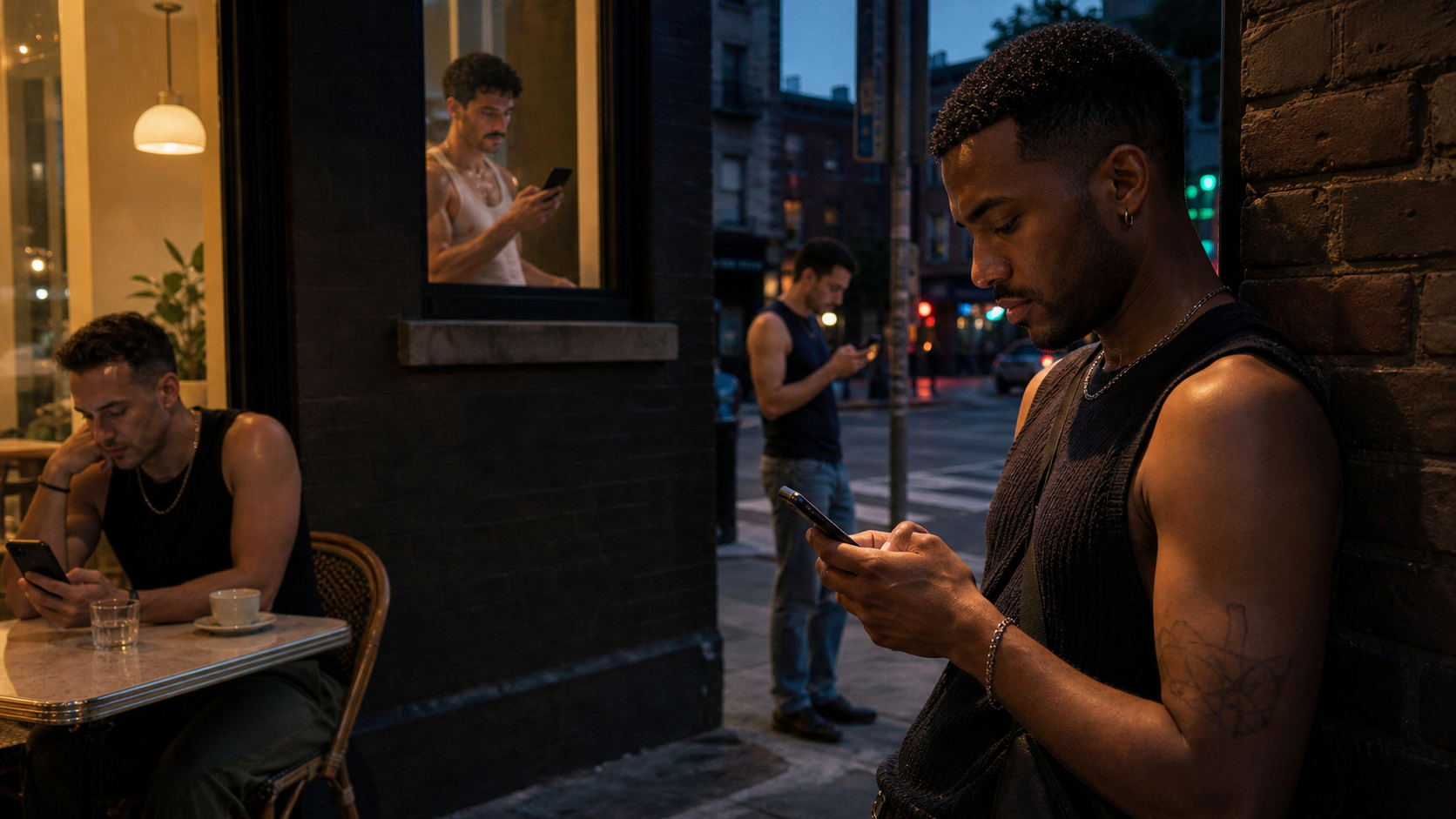
Grindr does not need you to swipe left and right. Open it and the room has already changed. Someone came online. Someone moved closer. Someone arrived at the bar, hotel, airport, or apartment building. Distance has rewritten the screen.
That is the app’s sharpest retention mechanism. The Grid defaults to nearby people, ordered by relative location. It is less a catalog than a live sensor for possibility around you now.
Calling that “addictive” describes a feeling, not a clinical finding. The defensible product claim is narrower: every new place and moment can contain genuinely new information, so checking again has obvious value.
Only 8.4% paid
Grindr reported 14.985 million Average MAUs and 1.258 million Average Paying Users for 2025. Its disclosed Average Paying User Penetration was 8.4%—fewer than one in twelve. A Paying User includes subscription renewals and one-off consumable purchases, not only subscribers.
That small group carries enormous weight. In Q1 2026, subscriptions and consumables generated 82.1% of revenue. Average Paying Users reached 1.385 million, up 18.6%, though Grindr disclosed no comparable MAU figure.
The free network creates the density. The paying minority buys leverage inside it.
Proximity creates variable reward
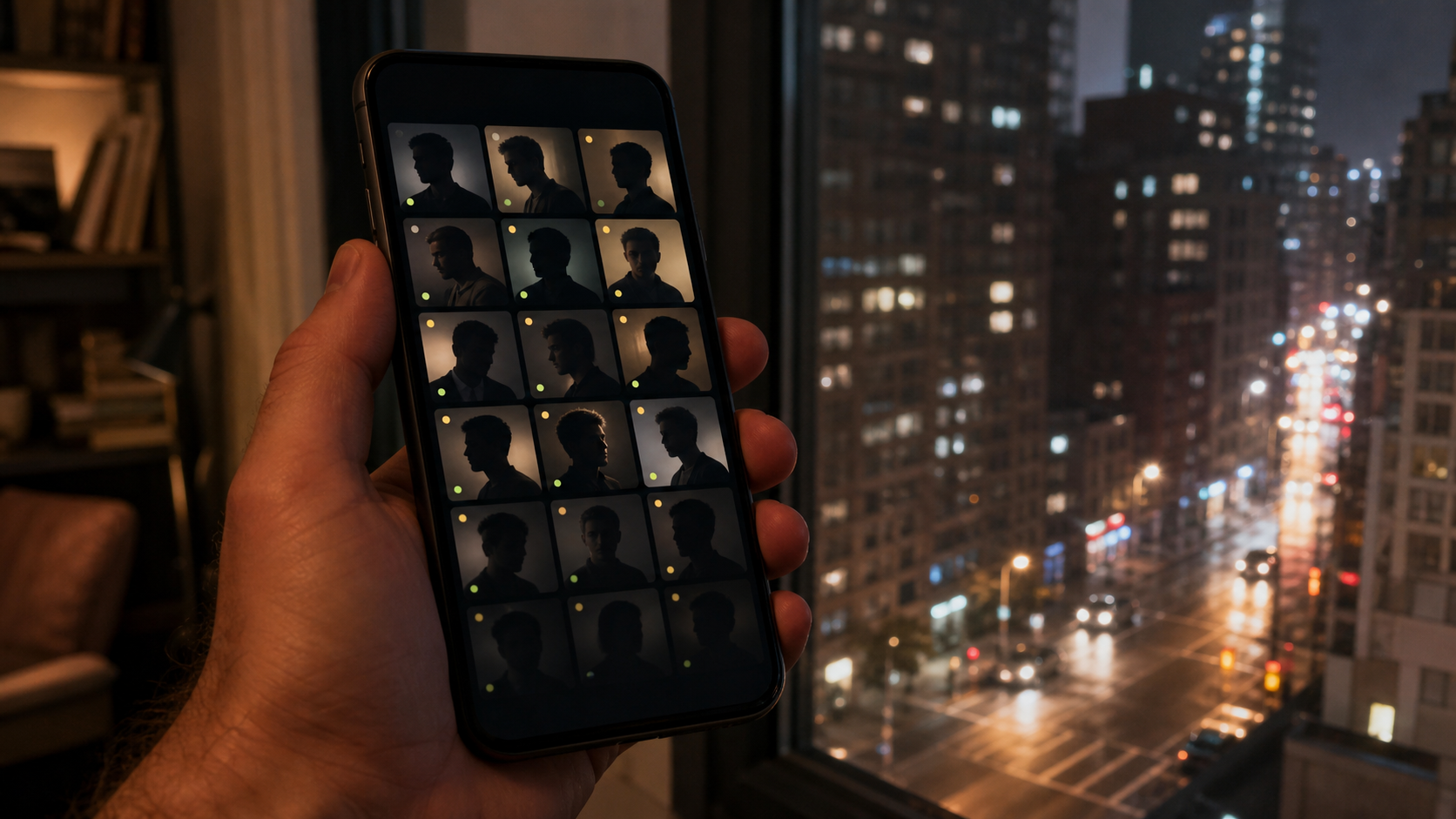
Most feeds create novelty with complex algorithms predicting what you will like. On Grindr, geography and timing do the work. The Grid reshuffles as people move, arrive, leave, or come online, so the same place can produce a different screen minutes later.
That creates the thrill of an uncertain outcome. Sometimes you “win”: a message, a Tap, a familiar face, someone unexpectedly close. Sometimes there is nobody interesting. Because the result cannot be known before opening, every return feels like another consequential draw.
Grindr says users spent more than 67 minutes per day in the app in 2025, while its open chat architecture supported more than 130 billion chats during 2024. Those are company-reported engagement measures, not evidence of addiction. They do show how much behavior the grid can initiate.
The interface feels like roulette: sometimes you open it and win, sometimes you lose. That creates a thrill every time you return.
Payment sells a wider room
The monetization follows the mechanism. Free users can view dozens of nearby profiles. XTRA can display up to a subset of 500. Unlimited can display all profiles and unlock broader combinations of controls. The product is not selling access to people; it is selling range, filtering, and certainty.
Boost turns visibility into a timed auction. For up to an hour, a buyer moves near the top of nearby grids, then receives a report showing views, Taps, and chats. Grindr even advises staying online and responsive while the boost runs.
Its newer For You surface adds six daily profiles and a refresh countdown, but only Unlimited users can interact there. Each paid layer answers the same anxiety: what am I not seeing? Grindr creates FOMO exceptionally well—the free Grid reveals enough possibility to make whatever remains hidden feel like the thing you cannot afford to miss.
Utility can become compulsion
This design deserves criticism as well as admiration. Xtra Magazine reported long-standing users calling the free experience “unusable” amid ads and paywalled features. A mechanism can be commercially effective while making the product feel worse for the majority who sustain its network.
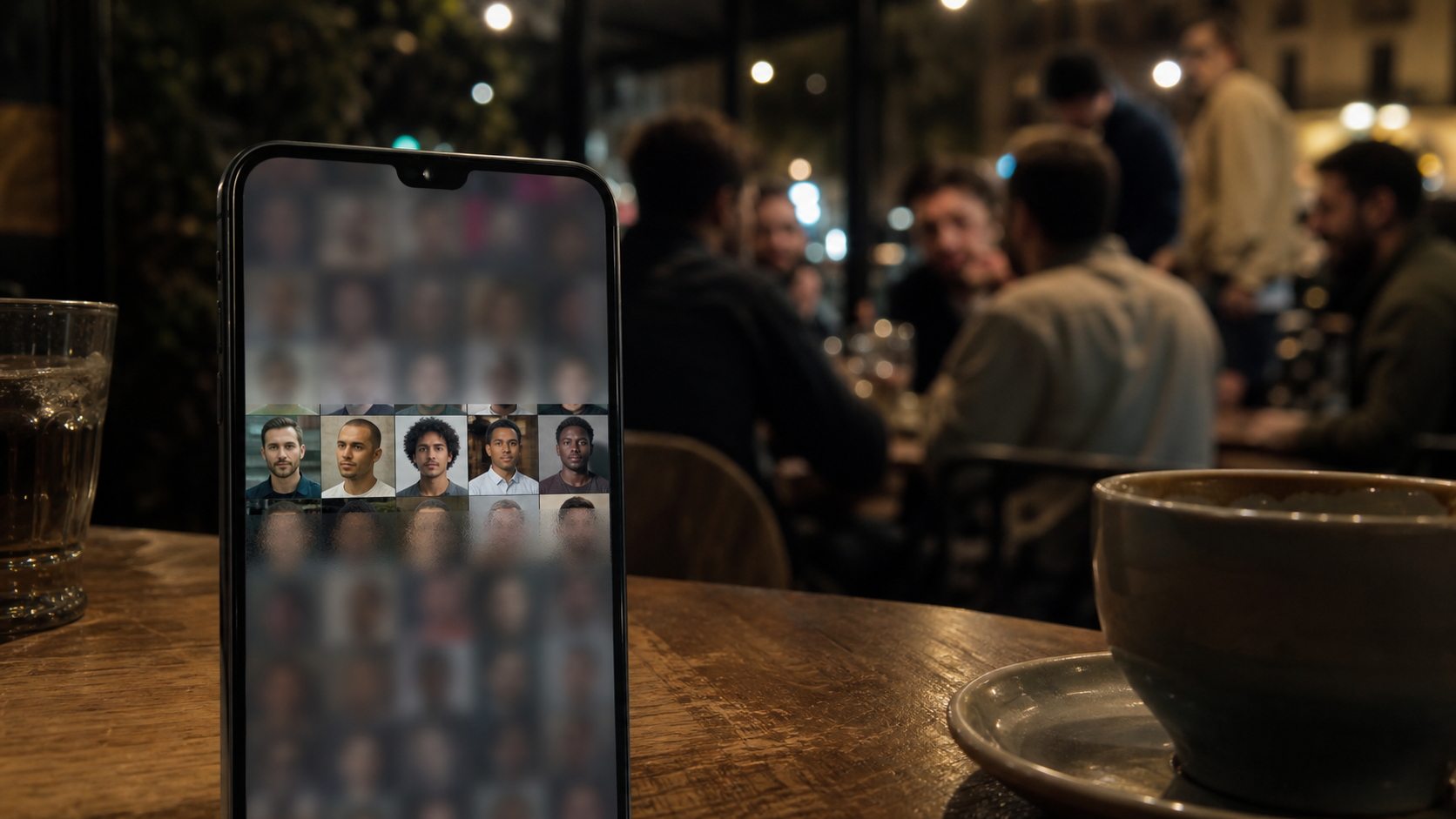
Still, the broader lesson is unusually clean. Grindr compresses location, availability, identity, and intent into one glance. The app becomes more useful precisely when other people return, which gives every user a reason to check and every check a chance to reward someone else.
Unfortunately, that is exactly what makes Grindr such a great product. It makes people want to come back again and again and again, chasing that jolt of possibility each time the tiles reshuffle.
Sources