Film
What is IMAX 70mm, anyway?
The Odyssey was shot on an absurdly large strip of film. The more interesting story is what Christopher Nolan changed to make that possible.
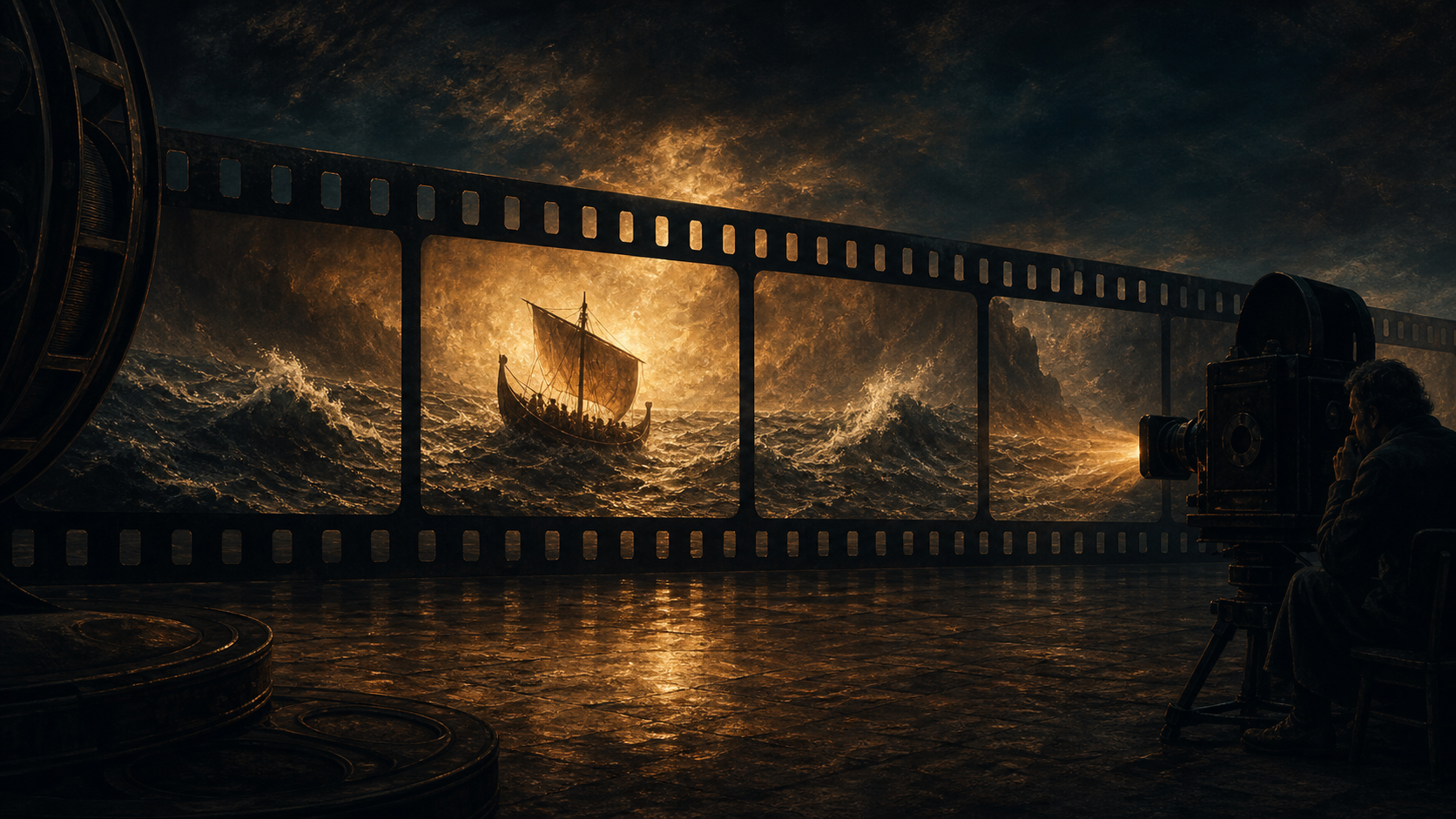
Start with the strip of film
“IMAX 70mm” sounds like three premium cinema words welded together. The useful way to understand it is more physical: it is a very large photograph, repeated 24 times every second, then pulled through a projector in front of an enormous screen.
The camera actually records onto 65mm negative film. The finished projection print is 70mm wide, which is where the format gets its familiar name. That extra width historically made room for sound tracks; modern IMAX sound runs separately, synchronized to the picture.
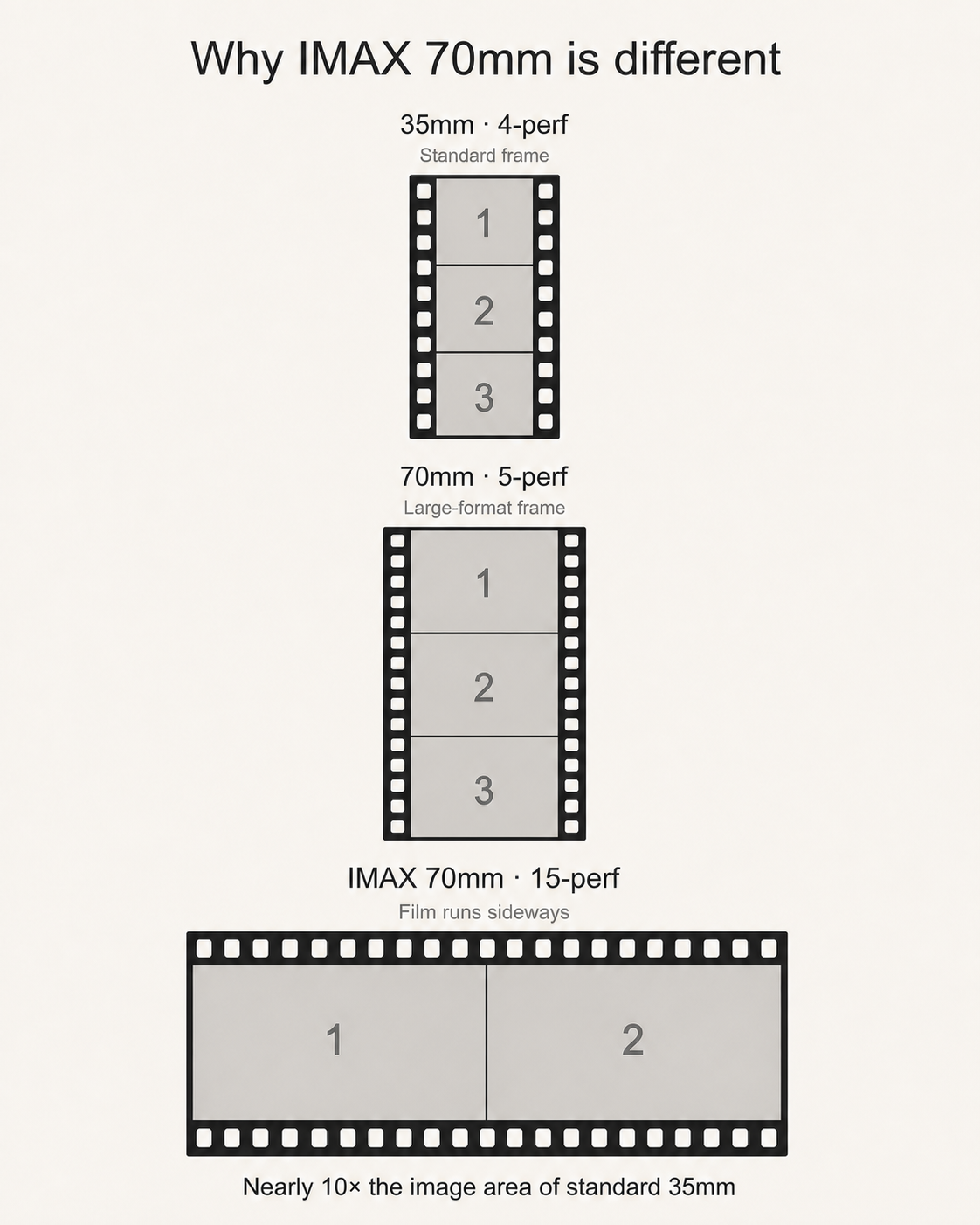
But width is only half the trick. A conventional movie frame travels vertically through the camera. IMAX turns the film sideways and uses 15 perforations for every frame. That creates a huge 1.43:1 image—taller, closer to a square, and able to carry far more visual information than standard 35mm.
The frame is almost comically large
A normal 35mm frame is usually four perforations tall. An IMAX frame stretches across 15. IMAX describes the result as almost ten times the resolution of standard film projection; more literally, the exposed image area is roughly ten times larger than a common four-perf 35mm frame.
That extra area is why the picture can fill a six-storey screen without immediately turning soft. Sand, skin, sailcloth, water, and the horizon remain distinct. The 1.43:1 frame also reveals more above and below the usual widescreen crop, so scale comes from height as much as width.
And because it is analog, there is no fixed pixel count hiding inside the frame. You see texture, grain, color, and detail carried through a photochemical chain. “18K” is a useful marketing shorthand for the presentation, not a literal digital resolution setting.
IMAX 70mm is not just a bigger screen. It is a bigger piece of the world captured in every frame.
The Odyssey used it for every frame
Nolan has been expanding the role of IMAX film for nearly two decades. The Dark Knight used it for major sequences. Dunkirk used it for most of its running time. Oppenheimer pushed it into intimate faces and even required Kodak to make a new black-and-white 65mm stock.
The Odyssey removes the escape hatch. It is the first theatrical feature shot entirely with IMAX film cameras. Not only the ships, storms, armies, and landscapes—the conversations too. Nolan and cinematographer Hoyte van Hoytema exposed 2.1 million feet of IMAX film to make it.
That matters because spectacle was never the format’s hardest problem. The hard part was putting an enormous, famously loud camera close to an actor and recording usable dialogue.
So they changed the camera
An IMAX film camera moves a vast amount of film very quickly. Its mechanical clatter is part of the reason productions traditionally saved it for action, landscapes, and shots that could be dubbed later. Shooting an entire drama meant treating the camera itself as an unfinished product.
For The Odyssey, Nolan and van Hoytema worked with IMAX on a next-generation camera named the Keighley, honoring the late film-quality experts David and Patricia Keighley. IMAX also developed a new sound blimp: a precision enclosure that suppresses the camera noise enough for synchronized dialogue while remaining compatible with multiple IMAX cameras.
The camera was too loud for dialogue. Nolan did not switch formats. He changed the camera.
The final cut is literally cut
The creative edit can be planned digitally, where the filmmakers can move scenes, test rhythms, and lock the story without touching the irreplaceable camera negative. But Nolan’s preferred photochemical master cannot remain an abstract timeline on a screen.
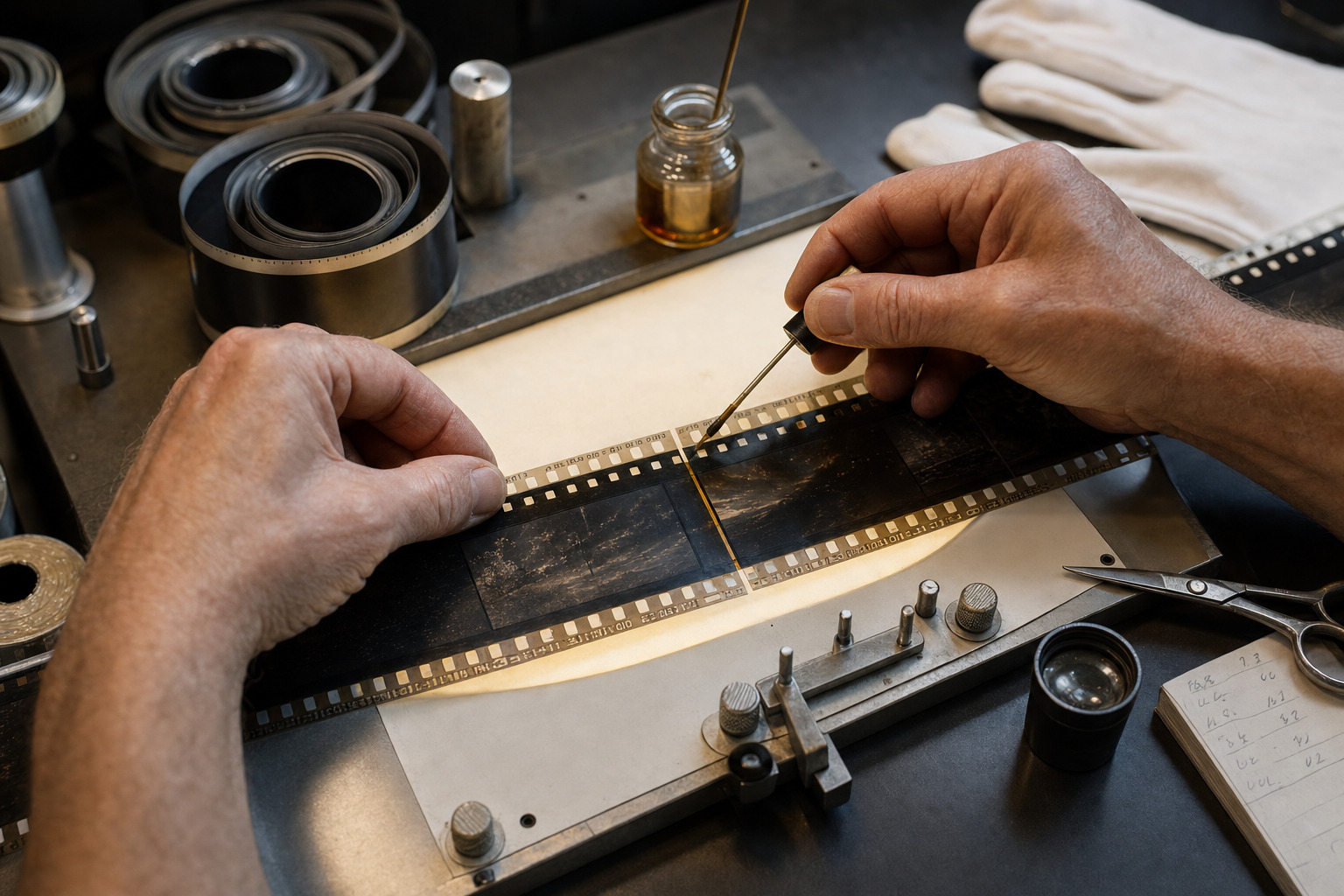
The final cut is literal: technicians cut the 65mm negative by hand and glue it back together, frame by frame.
The Odyssey exposed 2.1 million feet of IMAX film. Only the chosen frames survive into the conformed negative from which the film presentation is built. That is not retro styling. It is a chain of physical decisions in which precision cannot be undone with Command-Z.
In Israel, the real thing is a flight away
Israel has cinemas carrying the IMAX name. What it does not have is a theatre on IMAX’s official list of Odyssey screenings projected from IMAX 70mm film.
Digital IMAX is still an official IMAX product, and it can look excellent. But it is not the thing this article is describing. A digital projector replaces the physical 15-perf film print and film projector. You may get the larger screen, tuned sound, and an expanded image; you do not get Nolan’s complete analog 15/70 chain.
For an Israeli viewer, the closest venue on IMAX’s official Odyssey 70mm film list appears to be Cinema City IMAX Prague. The “real deal” begins with a flight out of Ben Gurion.
That distance makes the format’s scarcity concrete. Nolan built a movie around a presentation so specialized that, from Israel, seeing the intended film version is not a night at the cinema. It is a trip.
Nolan’s real signature is the infrastructure
It is easy to describe Christopher Nolan as a director who likes big screens, practical effects, and expensive film. That makes his choices sound nostalgic. The pattern is closer to product development.
When the existing 65mm black-and-white stock did not exist for Oppenheimer, the collaborators made it. When IMAX cameras were too loud to carry an entire dialogue-heavy epic, they built a quieter camera system and a new enclosure. When only a small number of theatres could project the final format, they still produced physical prints and organized the release around them.
The Odyssey is a story about a man taking the long way home. Its production followed the same logic. Nolan kept taking the difficult route—not because difficulty looks impressive, but because every technical decision protects a detail he wants the audience to feel.
Nolan’s signature is simple: “good enough” never reaches the final cut.
Sources
- IMAX: The Odyssey
- IMAX: Official Odyssey IMAX 70mm theatre list
- IMAX: The Odyssey opens with a record-breaking IMAX debut
- IMAX: Filmed For IMAX
- Kodak: Film format choices
- Kodak: How IMAX 65mm works on Dunkirk
- Kodak: Pushing IMAX film for Oppenheimer
- CBS News: How The Odyssey’s IMAX negative was assembled by hand